Machu Picchu
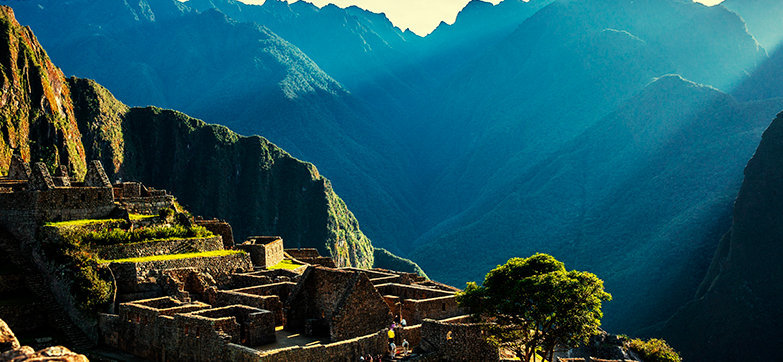
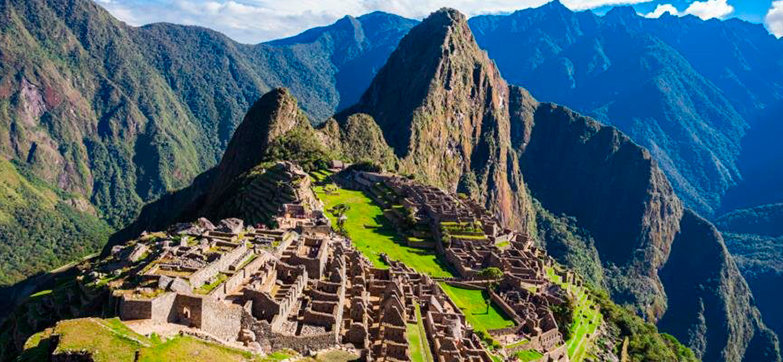
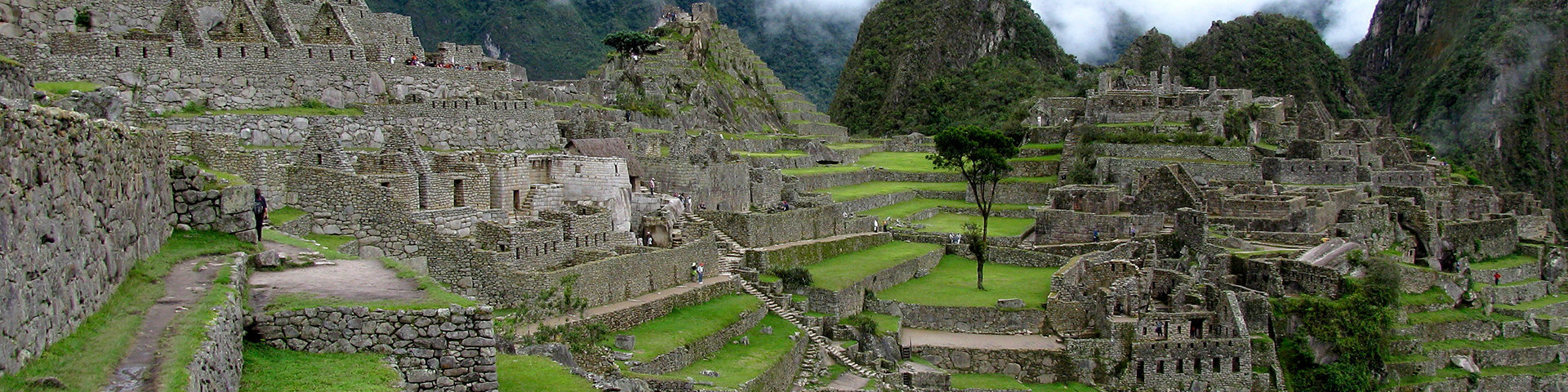
Discover the majesty and magic of this city in the clouds Machu Picchu has long been the top visitor attraction in Peru. Its popularity has increased in recent years, and it has become one of the leading landmark attractions in the world. In 1981, Machu Picchu was named a Peruvian Historical Sanctuary. In 1983, it was adopted a UNESCO World Heritage Site due to its cultural and physical significance.In 2007, Machu Picchu was voted one of the “New Seven Wonders of the World” in a worldwide internet poll. More recently, the historical site was voted as the “Traveler´s Choice, #1 Landmark Attraction in the World” by Trip Advisor. Since the Citadel can only be reached by foot or train, Machu Picchu travel begins with a striking scenic journey through the Urubamba or Sacred Valley. The valley then descends into a lush, mountainous sub-tropical forest where the site was conceived and constructed in the 15th century at the peak of the Inca Empire. The estate itself consists of two main sectors: the agricultural terraces and the urban living and ceremonial centers. The Incas were master builders and known for their stone cutting and fitting techniques. This technique was so precise that a knife blade will not fit between the joints. The construction was adapted to the fit the natural form of the mountains creating a breathtaking visual experience. Exploring the vast ruins with one of our Machu Picchu travel packages is a journey back in time. You will imagine the reality of living in such a rugged land. Your guide will describe what life would have been like for the Incas. Your Machu Picchu tour experience will be an unforgettable adventure.
Itinerary
Aguas Calientes
Aguas Calientes, also known as Machu Picchu Pueblo, is a village that joins the Sacred Valley and Machu Picchu. This eclectic gathering place for tourists is just a short thirty minute bus ride away to the famous citadel. A variety of hotels and restaurants are sure to satisfy every level of taste. Among this village’s major attractions is the pueblo’s namesake thermal baths. These baths famous baths are renowned for their healing and medicinal properties and a great way to relax after a long day in the citadel.
Huayna Picchu
Up until a just a few years ago, the hike to the top of Huayna Picchu, the prominent mountain overlooking the citadel in the classic photos, was an option only a few hearty adventurers attempted. In recent years, however, the strenuous hike has become very popular among all ages and types of visitors. Permits for the hike are now limited to 400 a day sell out two to three months in advance during the high season.
Machu Picchu Mountain Hike
For those who miss out on snagging Huayna Picchu permits or are not up to its strenuous nature, the hike up Machu Picchu Mountain is a great alternative. The mountain rises behind the citadel, opposite Huayna Picchu. While slightly longer in duration, allow about 2 hours, it has a less demanding incline and presents an equally spectacular view.
The Inca Trail
The Inca Trail to Machu Picchu is undoubtedly the most popular trek in South America and increasingly in the world. The Inca Trail is one of those rare treks where the journey and the destination are equally worthy and breathtaking. Not that long ago it was a trek for the individual adventurer with a map and a backpack. But because of its popularity, it is now restricted to 500 hikers a day under the supervision and care of professional operators.
Machu Picchu History
The citadel of Machu Picchu was constructed under the direction of the Inca emperor Pachacuti during his reign between 1438–1472. Most scholars agree that its purpose was to serve as his personal estate and a religious ceremonial center. It was abandoned a century later when the Spanish infiltrated the area during the Conquest. Remarkably, the Spanish probably never discovered the site, and it became a “lost” city throughout the Colonial period.
In truth, the “Lost City of the Incas” was never lost to the locals. Several families were living and farming the site when it was rediscovered in by Hiram Bingham in 1911. An 11-year-old boy led the American explorer to the site, and Hiram Bingham brought it to national and worldwide attention.
What to wear at Machu Picchu
Because of its mountain setting, people often assume that Machu Picchu is higher in elevation than Cusco at 11,150 ft (3,400 m). In fact, Machu Picchu lies on the downside of the Andes as they descend toward the Amazon basin. At an elevation of 7,972′ (2,430 m), this mountainous region is considered tropical cloud forest and has a climate warmer and wetter than that of Cusco.
Temperatures during the dry months between May and September can run from 32 °F (0 °C) at night to 80 °F (30 °C) during the day. During the rainy season, the high temperature rarely gets above 64 °F (18 °C), with the nighttime lows around 32 °F (0 °C). However, the weather at Machu Picchu can vary wildly from hour to hour. As in Cusco, you should come prepared with a jacket, rain poncho and sunscreen.
Includes / Not Included
Photos